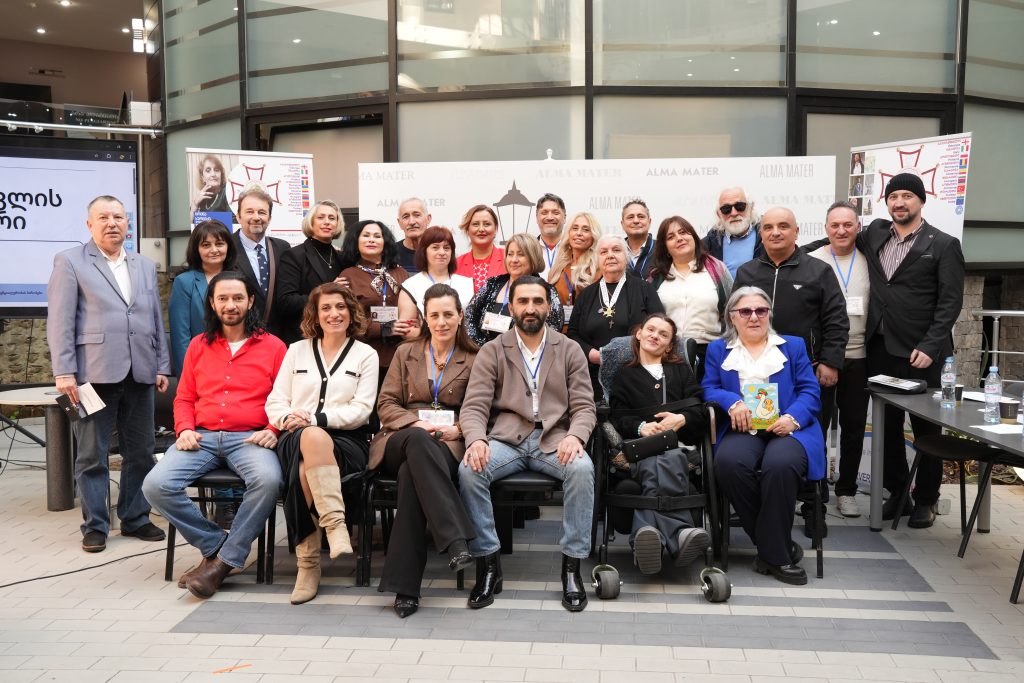

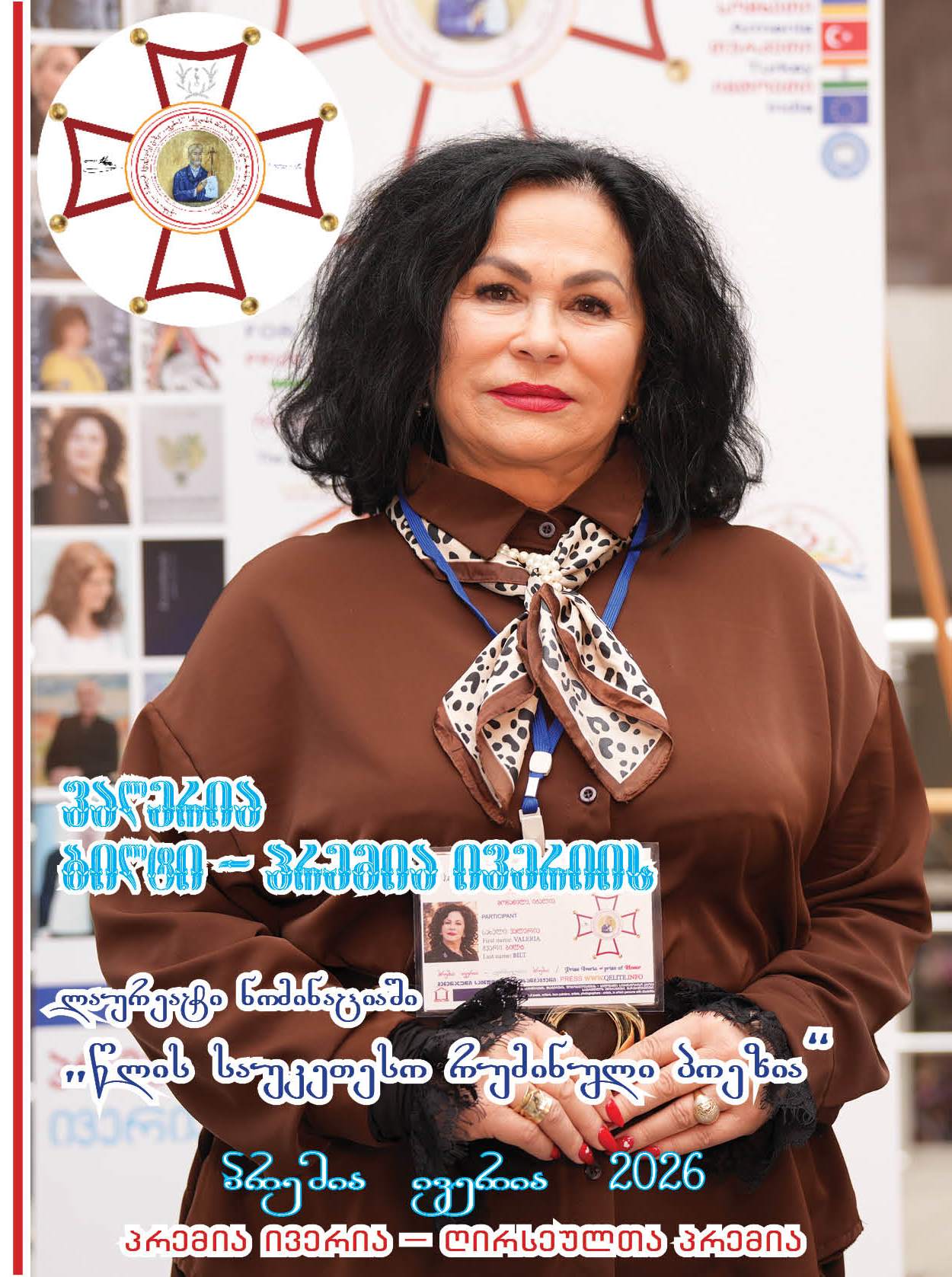
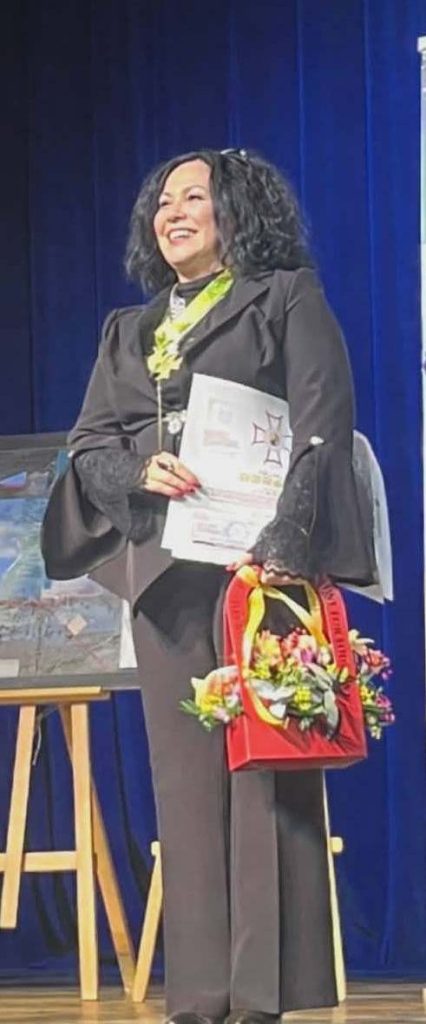
ვალერია ბილტ – წმინდა ილია მართლის (ჭავჭავაძის) გაზეთ „ივერიის“ სახელობის პროზა-პოეზიის საერთაშორისო პრემია – „ივერიის“ 2026 წლის ლაურეატი ნომინაციაში „წლის საუკეთესო რუმინული პოეზია“
პროექტი ხორციელდება სრულიად საქართველოს კათოლიკოს-პატრიარქი, ცხუმ-აფხაზეთისა და ბიჭვინთის მიტროპოლიტი, უწმინდესი და უნეტარესი, ილია მეორის ლოცვა-კურთხევით. პროექტი ხორციელდება 2013 წლიდან
The Woman of All Times
Between me and her
there are many women.
Layers of light and wound,
onion skins I peel away with tears.
I am every fragment:
the one who waits for the return,
the shadow that burns in silence,
the tear of a mistaken love,
the vein that did not know how to leave,
the woman who lost her son
and searches for him in the dreams of night,
touching shadows, calling for light.
I walked with Electra through corridors of blood,
I kept silent with Antigone
before a law without a heart,
I watched with Medea
as love turned into a blade,
I wove with Ariadne
the thread between loss and salvation,
I cried out with the mother
who searches for her son in dreams.
I am the woman who carries them all
without signing their names,
without repeating their destiny,
without accepting their verdict.
Within me gather
the woman who was forgotten,
the one who burned,
the one who loved wrongly,
the one sacrificed in the name of a story,
the one who screams into the night
and finds her son only in dreams.
I am the woman who has learned
to wait for her own exit from the labyrinth,
without the fabric that postpones death,
breaking the threads in order to begin life.
Between me and all of them
breathes a single story –
of the woman who survives
all the stories written about her.
Confession
I want to place my hidden eye
to scan the universe
and see it in its splendor
and all-encompassing power.
To pierce through genesis,
where the dance of happiness
is braided with pain
and gives birth to love –
to the majestic infinite,
for the inconstancy of mortals in their bodies
and of those without death,
steadfast in the proudness of the spirit.
I want to gather the whole sky
into my fist
and shape it as I feel.
I want to kiss all the saints
with my tender kiss,
then bind them by the soul
into a silver garland
and keep them captive there,
within my shy altar.
I want to place my hidden eye
to scan, at sunset,
the dance that divinity itself performs
in the happiness
we live
when we become one
with the love
of Jesus.
MANTRA OF THE WORD
Before me, the Word was there –
a quiet river flowing under the bones of time.
It called my name
and held me, whole and trembling,
as the world spun itself into shadows.
Through the Word, I breathe
like sunlight threading through leaves.
Through the Word, I gather myself
from fragments scattered in the wind.
A pure Word wounds no one.
A living Word cannot lie.
A Word born from the heart
sings, even when silence reigns.
I fall still,
to hear the Word
echo in the hollow of my soul.
I speak,
and the Word becomes me.
I hold it close,
so I will not forget
the light it leaves behind.
The Word is covenant,
a bridge spanning fear,
a flame that pierces shadow.
It is light
that carries us
beyond ourselves.
Amen.
I, The Forest
I am the forest – my body flows
through the fibers of light, and my heart beats
beneath the green moss, where the springs
whisper their names to one another.
I carry years in my depths like warm stones,
and each of my branches is an old wound
that has learned to bear fruit.
You never see me entirely –
I always leave something in shadow,
so you may remember that life grows in silence too.
I am the forest – my roots touch
the entrails of the Earth
like fingers searching for ancient truths.
From my leaves flow seasons,
from my birds, beginnings,
from my wind, stories to tame loneliness.
When you lose your steps within me,
you are not lost – you are rewritten.
I hold you in my cool embrace
and show you how one can live
without haste, without cry,
with no other time than that of the sap
that rises and falls and rises again,
like a wordless prayer,
yet full of grace.
I am the forest –
I never die completely.
When a tree falls,
I give it birth elsewhere, in another light,
and let it grow from its own memory.
Thus I learn life too:
through breakings that become heights.
Stay a moment within me,
Listen to how I breathe.
Perhaps at last you will understand
that you too are a forest,
but you have forgotten how to hear your leaves.
Like a phone without signal, without wire.
Do Not Touch Light with Shadow
Do not raise your hand over her shoulders –
there stands an entire world,
a mother, a daughter, a sister,
a heart that holds the sky together.
Do not lock the word inside fear,
do not break the steps that seek freedom.
A woman is not a wall to strike,
but a well from which you drink life.
In her eyes burns an ancient light,
and every wound darkens her sky.
Yet even so, from her silence
a cry can be born that changes the world.
Lift up, do not strike.
Support, do not break.
A woman is not the ground beneath your feet,
but the bridge you cross toward yourself.
And if ever anger fills your hands,
think of the child
who would learn violence from your gesture.
Choose to be light –
for shadow leaves no trace of humanity.
Today, our hands unite
not to strike,
but to protect.
Because no woman
should have to learn to hide her breath.
No woman should wear fear instead of skin.
No woman should suffer in silence.
And together we say:
Do not touch light with shadow.
Do not touch a woman with violence.
The Ballad of the Printing Press Between Lands
(3 centuries of Romanian-Georgian cultural relationships)
By the lakeshore, at old Snagov’s side,
Antim pressed the press in quiet stride,
With letters heavy as whispered prayers,
And sheets reborn from ancestral lairs.
– More slowly, Mihail, don’t rush the word,
Speech does not flee – only man and the wind are stirred.
In Bucharest, beneath princely vaults,
Brâncoveanu read the boyars’ scrolls:
– Vakhtang of Kartli asks no host, no sword,
But a press for Tbilisi, with letters adorned.
Antim fell silent. And deep inside
Returned the child who once had cried:
Andrei his name, from Georgia torn,
By Turks dragged off, through roads forlorn.
In Jerusalem, Dositei saved his breath,
And clothed him a monk, from life and death.
Antim became his name, a fate reborn,
With letter and prayer, with heaven and thorn.
To Wallachia he came, learned Romanian speech,
Bound life and face to the art of the press.
At Snagov, at Râmnic, at Târgoviște’s gate,
Until, beloved, a metropolitan bishop he’d be made.
– Mihail Ștefan, my apprentice true,
Is worthy to bear the press through what’s due.
He calls him at Snagov, with gentle plea:
– To Tbilisi go, where the letter is seed.
– Anywhere, Father!
– Not anywhere, son,
But where words have not yet fully begun.
With iron chests, with paper and ink,
Mihail set out over mountains’ brink,
Through Moldavia, waters, foreign lands,
Counting letters like Christian hearts in his hands.
In Tbilisi, King Vakhtang receives him there:
– Are you the envoy who builds us letters fair?
– From Wallachia I come; Mihail Ștefan my name.
– With your hands, my language will remain.
In a humble house the press is born,
Day and night letters on paper are drawn.
And the first Georgian Gospel appears,
Like a child of light from trembling hands and fears.
Two copies toward Târgoviște go,
Over mountains and seas, through meager times’ flow.
Antim binds them with care and desire,
And offers them to Brâncoveanu, the sire.
But fate breaks down in three crucifixions:
At Isfahan, Vakhtang learns chains and afflictions;
At Istanbul, Brâncoveanu falls by the blade;
At Adrianople, Antim to eternity’s shade.
And yet, in Tbilisi, the press does not cease –
The letter still presses, still births, still increases.
Twenty books into the world are sent,
Like candles aflame on a sacrificial pyre, heaven-sent.
Vakhtang dies in exile, in Astrakhan’s cold,
Mihail from Kartli fades, quiet and old,
But in a library, in Bucharest’s keep,
An ancient Gospel still murmurs in sleep.
And on its first page, boundless and bright,
Stand three names united by letters of light:
Antim, Brâncoveanu, Vakhtang the Great –
Two lands, one printing press,
a single calling, one fate.
Top of Form
Bottom of Form